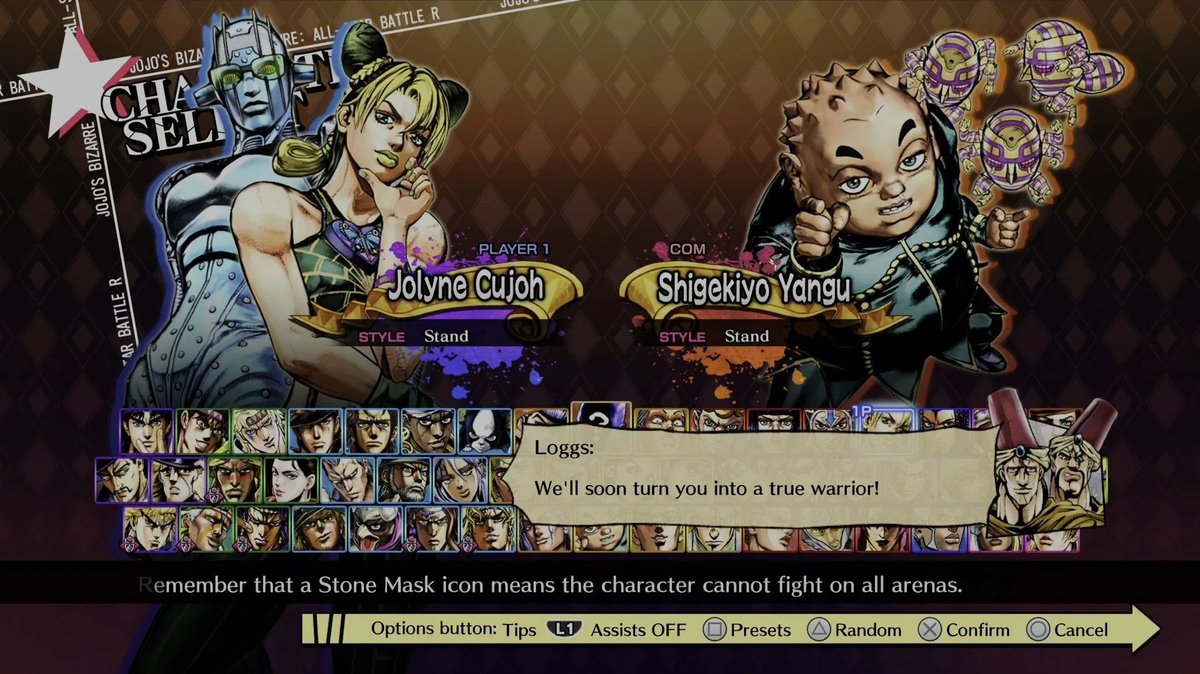
Dive into the bizarre, the spectacular, and the utterly unique world of JoJo’s Bizarre Adventure, and you’ll quickly confront its beating heart: Stands. More than just flashy superpowers, Understanding JoJo Stand Lore & Abilities is key to appreciating the strategic genius, character development, and sheer creativity that defines Hirohiko Araki’s iconic saga. These psychic manifestations are a direct reflection of their users, embodying their spirit, quirks, and raw potential, making every encounter a thrilling psychological chess match.
This isn't just a guide; it's your personal handbook to unraveling the complex, fascinating mechanics behind these spiritual entities. We'll demystify how they work, why they matter, and what makes each Stand a unique, unrepeatable force.
At a Glance: Your Stand Lore Cheat Sheet
- What are Stands? They're visible manifestations of a user's life energy or soul, acting as extensions of inner power.
- Deeply Connected: Stands are intimately tied to their users; damage to one often affects the other, and their existence is mutually dependent.
- Unique as Fingerprints: Each Stand is singular, mirroring its user's personality and inherent abilities.
- Evolving Power: All Stands possess "Developmental Potential," allowing them to grow stronger and acquire new abilities through battle and mastery.
- Six Core Stats: Stand abilities are measured by Destructive Power, Speed, Range, Persistence, Precision, and Developmental Potential.
- Ranked Grades: These parameters are graded A (Excellent) down to E (Very Weak), or "None" if incomparable.
Beyond Mere Magic: What Exactly Are JoJo Stands?
First appearing in the legendary Stardust Crusaders arc, Stands revolutionized the concept of superpowers in manga and anime. Forget mystical spells, advanced technology, or divine intervention; Stands are purely human. They are the visual manifestations of a user's life energy or soul, psychically generated by an individual known as a Stand User. Think of them as your inner self, given physical form and formidable abilities.
Creator Hirohiko Araki’s genius lies in emphasizing humanity's strength. Characters in JoJo don't rely on external gadgets or god-like blessings; they tap into their own inherent power. Stands serve as extensions of this inner force, making every battle a deeply personal, often existential, struggle. This approach ensures that the strategic prowess, willpower, and character of the Stand User are always at the forefront, rather than just the raw power of their Stand.
The Unbreakable Connection: User and Stand
The most critical piece of Stand lore is the profound, almost symbiotic, relationship between a Stand and its User. They are, in essence, two sides of the same coin, intrinsically linked in every conceivable way.
Two Sides of the Same Coin: Control & Damage
A Stand is not an independent entity with its own free will. It must be guided by its human User and cannot typically act on its own accord. This requires strategy, foresight, and a deep understanding of one's own Stand's capabilities.
Even more crucial is the shared vulnerability: any damage a Stand receives is typically reflected as an equivalent injury on its User, and vice-versa. If a Stand takes a punch, its user feels the impact. If a user is cut, their Stand might visually reflect that damage. This mechanic raises the stakes in every fight, forcing Users to protect their Stands as if they were their own bodies.
Naturally, there are nuances and exceptions:
- Automatic Stands: Some Stands operate largely independently, following pre-programmed commands or conditions, but their primary directive still originates from the User. They might not reflect damage immediately or perfectly.
- Bound Stands: These Stands are physically integrated into an object or environment, like a car or a specific area. Their damage reflection rules can vary, sometimes making the object itself the vulnerable point.
- Specific Abilities: Certain Stands possess unique traits that mitigate damage reflection. For example, Silver Chariot's armor can be damaged without its User, Polnareff, taking the full brunt, though the armor eventually breaks.
The Ultimate Sacrifice: Existence & Destruction
The bond extends to life and death itself. If a User dies, their Stand generally ceases to exist, fading away as the life energy that fueled it dissipates. Conversely, if a Stand is destroyed, its User usually dies as well. This rule even applies to immortal beings like Vampires, underscoring the absolute nature of this connection. The destruction of their Stand is a complete annihilation of their spiritual being.
Again, rare exceptions prove the rule:
- Notorious B.I.G.: This Stand is a chilling example of a Stand that can persist and even activate beyond its User's death, though it's driven by an insatiable hunger.
- Certain Automatic Stands: Some highly autonomous Stands might allow a User to survive the Stand's destruction, especially if the Stand operates far from the User's physical body.
A Reflection of Self: Individuality & Mental Prowess
Perhaps the most captivating aspect of Stands is their individuality. Each Stand is unique, mirroring the User’s personality, fashion sense, and inherent abilities. This connection highlights the diversity and "beauty" of humanity, as Araki puts it. From the stoic combat prowess of Star Platinum to the whimsical healing touch of Crazy Diamond, every Stand is a direct window into its User's soul.
Stands are deeply tied to the mental abilities of the user. A User's resolve, intelligence, creativity, and even their emotional state can influence their Stand's effectiveness and how its abilities manifest. This is why developing as a character often means developing your Stand's capabilities.
Decoding Raw Power: The Six Stand Parameters
Beyond their unique abilities, all Stands can be objectively analyzed through six core Stand Parameters (also known as Stand Statistics). These parameters measure different facets of a Stand's capabilities, providing a comprehensive blueprint of its strengths and weaknesses. Crucially, Stands also possess Developmental Potential, allowing them to grow stronger and acquire new abilities through battle and experience. As a user masters their Stand, this potential typically decreases.
Developmental Potential: The Growth Engine
This parameter measures a Stand's capacity for improvement and the discovery of new functions or abilities. When a Stand is first manifested, its Developmental Potential is often high, signifying room for growth. As the User trains, fights, and gains a deeper understanding of their Stand, this parameter decreases. An E-Ranking indicates that all abilities have likely been discovered, or that the Stand has very limited growth potential left. It's a testament to the idea that even the most powerful Stands can evolve and surprise.
Breaking Down the Stats:
Here are the six parameters, explained:
- Destructive Power: This measures a Stand's strength and its ability to cause physical or environmental damage.
- High for: Close-Range Stands like Star Platinum or The World, known for their powerful punches and physical might (typically Rank C or higher).
- Low for: Stands with more subtle or utility-based abilities, like Heaven's Door, which manipulate reality rather than physically demolish it.
- Speed: This parameter measures a Stand's agility, reflexes, and how quickly it can perform actions or move. It can also refer to the speed at which an ability manifests or takes effect.
- High for: Close-Range Stands, often needing to land quick, precise blows. Star Platinum is famous for its "faster-than-light" punches.
- Low for: Stands with complex, delayed, or large-scale effects.
- Range: This measures a Stand's manifestation range (how far it can be from its User), its ability's influence area, and its spatial mobility.
- Inverse Relationship: Often, Range is inversely proportional to Destructive Power. Powerful Close-Range Stands tend to have low Range (e.g., Star Platinum, The World), while Long-Range Stands might be weaker physically but can affect targets from afar (e.g., Hierophant Green).
- Persistence: Also known as Stamina or Durability, this measures how long an ability can be maintained, a Stand's overall resilience, or the cooldown before an ability can be reactivated.
- High for: Stands whose abilities require sustained effort or are highly durable. Notorious B.I.G., for example, demonstrated extreme persistence.
- Low for: Stands with powerful but fleeting abilities, or those that quickly drain a User's energy.
- Precision: This measures a Stand's accuracy and its ability to exert fine control over its actions or effects on specified targets.
- High for: Stands requiring intricate manipulation or pinpoint attacks, like Gold Experience, which can imbue life into objects with great accuracy.
- Low for: Automatic Stands, which often operate on broad parameters and lack the fine control of a direct-control Stand (generally Rank D or lower).
- Developmental Potential: As discussed, this measures the capacity for improvement and new functions. An E-Ranking signifies that all abilities are likely discovered or that growth potential is minimal. It's a dynamic stat that changes as the User masters their Stand.
The Grading System: A, B, C, D, E, None
To simplify the comparison of these parameters, a letter-grade ranking system is used:
- A (Excellent): The highest possible ranking, denoting superiority in that specific category. A Stand with 'A' in Destructive Power is incredibly strong.
- B (Good): Above standard, indicating a decent and reliable capability.
- C (Comparable to a Human): Average. A 'C' in Speed means it's as fast as a peak human.
- D (Weak): Below average, indicating a noticeable deficiency.
- E (Very Weak): Far below average, with minimal utilization in that category.
- None: This rank is used when a parameter is impossible or irrelevant to compare. For instance, a purely automatic Stand might have "None" for Precision because it lacks a conscious user to guide it accurately.
From Close-Range Brawlers to Automatic Assassins: How Parameters Shape Abilities
Understanding these parameters helps us grasp why Stands behave the way they do and how Users strategize. A Close-Range Stand, for instance, typically boasts high Destructive Power and Speed (often A or B) but has a very limited Range (D or E). Think of Star Platinum or The World, both capable of devastating barrages but needing to be right next to their target.
Conversely, a Long-Range Stand like Hierophant Green might have a lower Destructive Power (C or D) but an impressive Range (A or B), allowing it to attack from a distance or set traps.
Then there are Automatic Stands like Sheer Heart Attack (Killer Queen's sub-Stand). These often have low Precision (D or E) because they operate on pre-set conditions rather than direct user control, but might have very high Persistence or a unique Range due to their independent nature. This dynamic interplay between parameters creates an incredible diversity of abilities. To explore the fascinating possibilities and even design your own unique spirit, you might enjoy experimenting with a Jojo Stand Generator.
Mastering Your Stand: The Path of Growth and Discovery
The concept of Developmental Potential is one of the most exciting aspects of Stand lore. It means that no Stand is ever truly "finished." A User's growth—mentally, emotionally, and strategically—can unlock new facets of their Stand's power. Throughout JoJo's Bizarre Adventure, we see Stands evolve, gain sub-abilities, or reveal entirely new powers under duress or as their Users undergo significant personal development.
This potential decreases as the user masters the Stand. Once all its inherent abilities are discovered and perfected, the Developmental Potential might drop to an "E," signifying that the Stand has reached its peak with that specific User. This ties back to Araki's emphasis on human potential; the Stand grows as the User does, reflecting a journey of self-discovery and resilience.
Beyond the Punch: Why Understanding Stand Lore Matters
Grasping the intricate lore and mechanics of Stands isn't just for superfans; it fundamentally enhances your appreciation for JoJo's Bizarre Adventure.
- Strategic Depth: You'll better understand the incredible strategies and psychological warfare that define JoJo battles. Knowing a Stand's parameters allows you to predict weaknesses, appreciate clever tactics, and see why certain matchups are so compelling.
- Character Insight: Stands are reflections of their Users. By analyzing a Stand's abilities and statistics, you gain deeper insight into the User's personality, motivations, and even their subconscious desires.
- World Building: The consistent rules surrounding Stands create a cohesive and believable (within its own context) world, where every new ability feels earned and integrated.
- Creative Inspiration: The sheer variety and ingenuity of Stands can spark your own creativity, whether you're imagining new abilities or simply marveling at Araki's boundless imagination.
Your Burning Questions About Stands, Answered
Let's address some common curiosities and clarify a few points about these spiritual manifestations.
Q: Can a non-Stand User see a Stand?
A: Generally, no. Stands are invisible to ordinary humans. Only Stand Users, or individuals with a natural spiritual sensitivity (which is rare), can perceive them. This often leads to comical or terrifying misunderstandings when a fight breaks out between Stand Users in public.
Q: How are Stands acquired?
A: Stands are primarily acquired in a few ways:
- Natural Birth: Some individuals are born with Stands, often passed down through bloodlines (like the Joestar family).
- The Stand Arrow: Puncturing oneself with a specific ancient artifact, the Stand Arrow, can awaken a Stand. This is a risky gamble; those without the necessary spiritual fortitude will die.
- Environmental Factors: Sometimes, intense spiritual trauma, nearing death experiences, or even exposure to certain cosmic energies (like the meteor in Morioh) can awaken a Stand.
Q: Are all Stands sentient?
A: Most Stands are not truly sentient in the way a person is. They are extensions of the User's will and consciousness. However, some Stands display distinct personalities or a degree of autonomy, seemingly communicating with their Users or acting on their own initiative (e.g., Koichi Hirose's Echoes Act 3). Automatic Stands are also "independent" in their function but still follow a core program set by the User.
Q: Are Stands always humanoid?
A: No, Stands come in a vast array of forms! While many are humanoid (like Star Platinum or Crazy Diamond), others take the form of animals (Iggy's The Fool), objects (Hol Horse's Emperor), phenomena (Red Hot Chili Pepper as electricity), or even entire environments (Death 13's dream world). Their form is tied to the User's unique essence.
Q: What happens if a User has multiple Stands?
A: This is extremely rare. While some Stands have sub-abilities or "Acts" (like Echoes), a User typically only possesses one unique Stand. Any instances of multiple Stands usually involve complex circumstances, such as being possessed by an external entity, or a Stand that grants control over other objects or beings (like Highway Star).
Embrace Your Inner Stand User
JoJo's Bizarre Adventure asks us to look inward, to recognize the untapped potential and bizarre manifestations of our own spirit. By understanding the intricate lore and abilities of Stands, you're not just consuming a story; you're gaining a richer, more nuanced perspective on the incredible world Araki has built. Every "Ora Ora Ora!" and "Muda Muda Muda!" carries a deeper weight, every strategic move becomes clearer, and every character's journey becomes more profoundly resonant. So, delve in, observe, and let the unique powers of the Stands unfold before you.